On the Cape Fear coast, salt air decides how long a house lasts more often than any storm does. The materials that fail first are ordinary steel fasteners, light-galvanized connectors, and anything that traps salty moisture against wood. We specify stainless steel or heavy hot-dip galvanized hardware, keep dissimilar metals apart, and build walls that dry out. None of it shows in the finished house, and that is the point.
What does salt air actually do to a house?
Salt air carries chloride onto every exposed surface. Chloride plus moisture speeds up corrosion of steel dramatically, and FEMA's own guidance says corrosion rates are far higher in coastal environments than inland. The damage is slow and quiet. A connector that looks fine at the final inspection can rust and flake five or eight years later, and that connector may be the one holding a deck ledger or a roof rafter down.
Salt also stays wet. A salty film pulls moisture out of the air, so surfaces that would dry inland stay damp on the coast. That is why the problems show up at joints, laps, and fasteners, where water can sit.
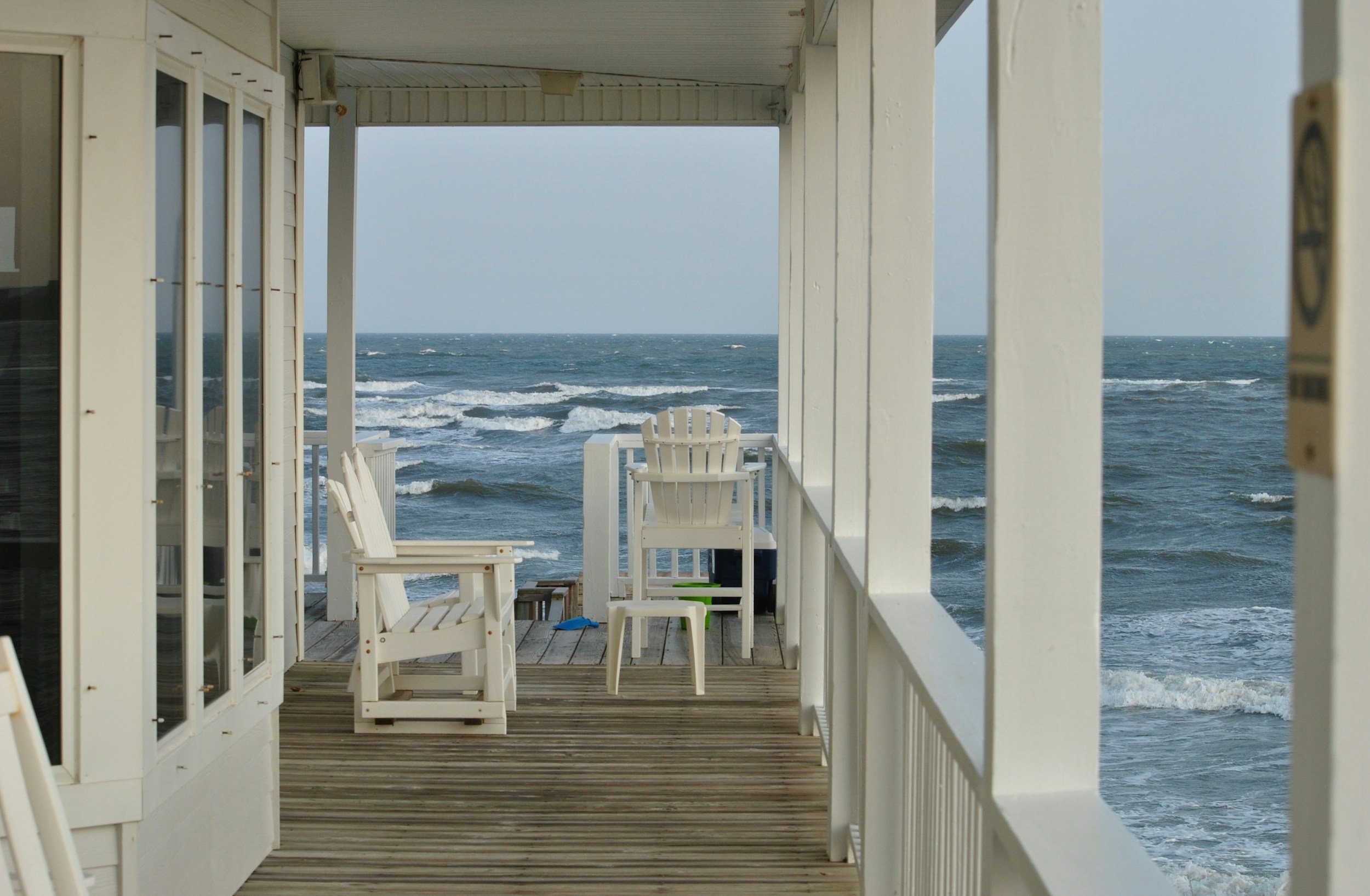
Which materials fail first near the water?
In our experience on Wilmington and island jobs, the failures come in a predictable order.
Fasteners. Bright or electroplated screws and nails rust first. We have pulled painted, non-stainless screws off a coastal job that were bleeding rust through the finish within a few seasons.
Standard connectors. Off-the-shelf joist hangers and straps often carry a thin zinc coating meant for inland use. Near salt water that coating gets used up fast.
Concrete anchors. Common blue concrete screws are carbon steel. In salty concrete they corrode inside the hole, where nobody sees it.
Trapped wood. Trim and siding nailed tight to the wall with no way to dry will rot behind the paint.
Mechanical equipment. Condenser coils and outdoor electrical boxes take a beating. That is a maintenance and placement question as much as a materials one.
What do we specify instead?
Stainless steel where it counts. Exposed fasteners, deck and stair hardware, and anything we cannot get back to later get stainless steel. On a recent elevated structure near the Intracoastal, we cross-braced the pilings with stainless wire rope and stainless hardware for exactly this reason.
Heavy hot-dip galvanized everywhere else. FEMA's Technical Bulletin 8 points to stainless steel or thick hot-dip galvanizing, G185 or heavier, for coastal connectors and fasteners. The common G60 and G90 coatings are thinner than that. We order the heavier coating on purpose, and we match the fastener to the connector so the two metals are the same.
Stainless anchors in concrete. When we set windows and doors into concrete openings near the water, we use stainless fasteners with lead sleeves rather than standard concrete screws. It costs more per opening. It is the opening that will still be tight in fifteen years.
No mixed metals. Stainless screws in a galvanized strap, or copper flashing against steel, set up a small battery that eats the weaker metal. We keep metals consistent at every connection.
Treated lumber with compatible hardware. Modern pressure-treated lumber is harder on steel than older treatments were. The hardware has to be rated for the treatment, which in practice pushes us further toward stainless and heavy galvanizing.

Why does a rain screen matter on the coast?
A rain screen is a small air gap between the siding and the weather barrier, usually made with vertical battens. Water that gets behind the siding drains out the bottom, and air moving through the gap dries the wall. On the coast, where wind drives rain sideways and salt keeps surfaces damp, that drying gap is one of the cheapest ways to make siding and trim last.
The details matter. We chamfer the tops of the battens so water does not sit on a flat ledge, and we leave the bottom open with a screen so the gap can drain without letting insects in. A rain screen that cannot drain is just a slower way to trap water.
The Wilmington specifics
All of New Hanover County is treated as a high wind zone, and a large share of the projects we build sit within a short distance of salt water: the oceanfront, Wrightsville and the sounds, the Intracoastal, and the Cape Fear River. Salt exposure does not stop at the flood zone line. Homes a mile or more inland still see salt on every onshore breeze, and FEMA notes that owners may want corrosion-resistant hardware farther inland than the minimum guidance suggests.
Code sets the minimum corrosion protection, and local inspectors check it on structural connections. Everything above that minimum is a decision. We make it during design, because swapping hardware after the framing inspection means tearing out work that already passed.
Is it worth the extra cost?
Stainless and heavy galvanized hardware adds real money to a coastal build, mostly in the fasteners and connectors nobody will ever see. The comparison is not stainless against standard. It is stainless against the cost of opening a finished wall, a deck, or a window opening in ten years to replace a fastener that rusted through. On the coast, the hidden hardware is where the budget does its most important work.
Common questions
Do I need stainless steel everywhere?
No. Stainless is best for exposed hardware, decks, stairs, window and door anchors, and anything hard to reach later. Heavy hot-dip galvanized connectors with matching fasteners are a sound choice for protected structural framing. The right mix depends on how close you are to salt water and how exposed each part of the house is.
How close to the ocean does salt air matter?
The worst exposure is within a few hundred feet of open salt water, but salt travels. In Wilmington, homes near the sounds, the Intracoastal, and the river all see it. We treat any home in the area as a coastal home for exterior hardware and adjust up from there.
Can I fix rusting fasteners on an existing house?
Often, yes, if they are caught early. Exposed screws and deck hardware can be replaced with stainless. Structural connectors hidden in walls or under decking take more work to reach. If you see rust staining at a deck ledger or stair stringer, have it looked at before the next storm season.
Does a rain screen change how the house looks?
From the outside, barely. The siding sits out from the wall by the depth of the battens, usually about three eighths to three quarters of an inch, so window and door trim is detailed to match. Most people never notice it is there.
Planning a build or renovation near the water? Send us the address and we will walk through what salt exposure means for your materials and budget. Start a conversation with us.
Cory Thompson is a licensed North Carolina General Contractor (NC GC L.80094) and the founder of Thompson Design + Build in Wilmington, NC, designing and building homes on the Cape Fear coast since 2014. Code references reflect FEMA guidance and New Hanover County practice as of November 2026; requirements change and are verified per project.